
Scope Is a Pricing Decision, Not a Design Decision
Most flippers choose a scope by walking the house and asking what it "needs." That question pulls you toward design choices like quartz versus laminate or open concept versus closed. The better question is which scope the numbers reward. Every scope you consider creates a different deal, with its own ARV, rehab budget, hold time, and buyer pool.
Want to skip the spreadsheet? FlipSmrt pulls comps, estimates ARV and rehab, and runs the deal math from just an address. Your first 3 analyses are free.
Here are the three scopes in plain terms. A wholetail means you clean the house, fix only what blocks financing or a clean inspection, and relist fast, usually to owner-occupants willing to do some work themselves. A light flip covers cosmetic upgrades (paint, flooring, fixtures, lighting, maybe counters) aimed at a retail buyer using conventional or FHA financing. A full gut strips the house to the studs and replaces kitchens, baths, and major systems, competing with the best-finished comps on the street.
Because each scope changes the inputs, each needs its own MAO. The formula is MAO = (ARV x 0.70) - repairs. Say a house supports a $210,000 ARV as a light flip with $30,000 in rehab: $210,000 x 0.70 = $147,000, minus $30,000, gives a $117,000 MAO. As a full gut, the ARV rises to $250,000 but rehab jumps to $80,000: $250,000 x 0.70 = $175,000, minus $80,000, gives $95,000. The bigger ARV produces the lower offer.
MAO tells you what to pay, but it does not tell you what you keep. For that, run a separate net profit for each scope: sale price minus purchase, rehab, buying, holding, and selling costs. A full gut that takes five months carries more loan interest, taxes, insurance, and utilities than a wholetail that sells in six weeks. Those costs belong in the comparison, not in a footnote.
The goal of this post is to pick the scope that maximizes profit relative to the cash and time you put at risk. Comparing scopes side by side also guards against over-rehabbing, where you spend $50,000 to add $40,000 of value because the finished house looked better in your head than it does on paper.
Worked Example: One $170K House, Three Scopes, Three Profits
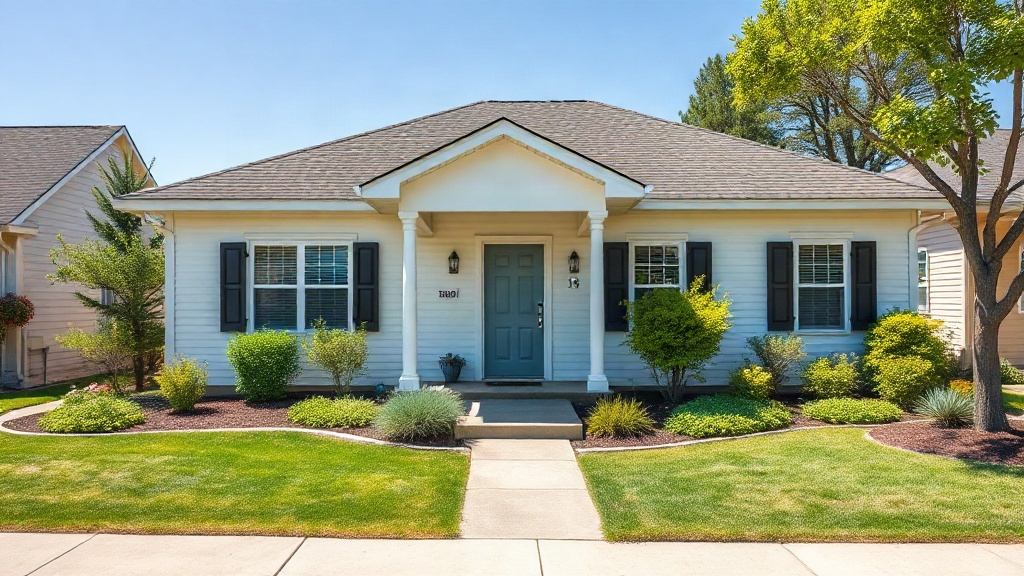
Picture a dated 3-bed, 2-bath ranch you can buy for $170,000. A few assumptions stay fixed across every scope: 2% buying costs ($3,400), roughly $2,000 a month in holding costs (loan interest, taxes, insurance, utilities), and 8% selling costs on whatever price you get. Only the rehab budget, the sale price, and the hold time change. That keeps the comparison honest.
Wholetail. You spend $12,000 on paint, flooring repairs, a deep clean and curb appeal, then sell for $255,000 after two months. Total costs are $170,000 + $3,400 + $12,000 + $4,000 holding + $20,400 selling (8% of $255,000) = $209,800. Profit is $255,000 - $209,800 = $45,200. Effort is low, risk is low, and your cash comes back quickly.
Light flip. A $38,000 budget covers new kitchen counters and appliances, refreshed bathrooms, LVP flooring throughout, and updated fixtures. Comps support a $300,000 ARV, and the project takes four months. Total costs are $170,000 + $3,400 + $38,000 + $8,000 holding + $24,000 selling = $243,400. Profit is $300,000 - $243,400 = $56,600.
Full gut. You spend $95,000 on a reworked layout, roof, HVAC, electrical, plumbing, and a full kitchen and bath remodel. The finished house sells at the top of the neighborhood for $345,000, but the job runs seven months. Total costs are $170,000 + $3,400 + $95,000 + $14,000 holding + $27,600 selling = $310,000. Profit is $345,000 - $310,000 = $35,000.
The full gut produces an ARV $45,000 higher than the light flip yet earns $21,600 less. Here is why. The extra $57,000 in rehab bought $45,000 more sale price, and after 8% selling costs you keep only $41,400 of it. Three extra months of holding add another $6,000. So $41,400 - $57,000 - $6,000 = -$21,600. The biggest ARV is not the biggest profit, and the light flip wins this house.
Worked Example: MAO and Return on Time for Each Scope
Start with the 70% rule as a quick filter. For the wholetail, $255,000 x 0.70 = $178,500, minus $12,000 in repairs gives an MAO of $166,500. The light flip works out to $300,000 x 0.70 = $210,000, minus $38,000, for an MAO of $172,000. The full gut lands at $345,000 x 0.70 = $241,500, minus $95,000, for an MAO of just $146,500.
At a $170,000 purchase price, the full gut is $23,500 over its MAO, so it fails the rule outright. The bigger ARV looks tempting, but the $95,000 rehab eats the spread before you even count seven months of carry. The light flip clears its MAO by $2,000. The wholetail sits $3,500 over, which is close enough to check with actual costs instead of rejecting on the rule alone.
Profit alone doesn't decide it, because time is a cost too. Assume 3% buying costs ($5,100), $1,500 per month in holding costs, and 8% selling costs, all-cash. That produces these results:
- Wholetail: $44,500 profit over 2 months = $22,250 per month, on $190,100 invested (23.4% return)
- Light flip: $56,900 profit over 4 months = $14,225 per month, on $219,100 invested (26.0% return)
- Full gut: $37,800 profit over 7 months = $5,400 per month, on $280,600 invested (13.5% return)
The light flip wins on total profit and return on cash. The wholetail wins on speed, freeing your capital for the next deal in half the time. The full gut puts the most money at risk for the longest stretch and earns the least, so it loses on every measure that matters.
Building this comparison by hand usually means three spreadsheet tabs, three rehab budgets, and three guesses at ARV. In FlipSmrt, you run the same address at each scope and get a comps-based ARV from adjusted sold comps within half a mile, line-item rehab costs priced for the county, and an MAO for each. You get all three answers in a few minutes, so you can compare them before you write an offer.
Run these numbers on a real deal in under 5 minutes
FlipSmrt turns an address into ARV, a rehab budget, and your Maximum Allowable Offer automatically.
Analyze a Property FreeWhen the Math Flips: Edge Cases That Change the Best Scope
Start with buyer financing, because it decides who can buy a wholetail. FHA and conventional buyers need a house that is habitable and appraisable: working heat, a sound roof, functioning plumbing and electrical, and no major safety hazards. If your wholetail fails that test, your buyer pool shrinks to cash buyers and other investors, and they price in the risk. A wholetail that looked best on paper can lose $15K or more once you realize only cash offers are coming.
Permit timelines hit the full gut hardest. Moving walls, rewiring, or replumbing usually means plans, permits, and inspections, and a backed-up building department can add weeks before work starts. Say your full gut carries $2,000 a month in taxes, insurance, and utilities, plus a $240,000 hard money loan at 12% ($2,400 a month in interest). A two-month permit delay costs $4,000 in holding plus $4,800 in interest, cutting $8,800 from profit before a single wall comes down.
Seasonality compounds that delay. A light flip that wraps in March lists into the spring buying season, when family buyers are most active. A full gut on the same house that finishes in November lists into the slowest stretch of the year. More days on market means more holding costs and a higher chance of a price cut.
The neighborhood's ARV ceiling caps what any scope can earn. If the best renovated comps within half a mile sold for $310K, a $95K gut with quartz and custom tile will not sell for $340K. Every dollar spent above what that ceiling supports comes straight out of your profit.
Finally, your lender can pick the scope for you. Many hard money lenders cap total loan amount as a percentage of ARV or limit the rehab budget they will fund. If your lender funds $60K in rehab draws and the full gut needs $90K, you cover the $30K gap in cash. That raises your cash invested and lowers your return, which can make the light flip the smarter exit.
Scope Mistakes That Quietly Shrink Your Profit
Most scope errors happen before demo starts, at the spreadsheet stage. The first is picking a scope from finished-flip photos on social media or listing sites instead of from sold comps at each finish level. A gorgeous kitchen tells you nothing about what buyers in that neighborhood actually paid for one. Fix: pull sold comps within half a mile and sort them into as-is, light-update, and fully renovated groups before you choose anything.
The second mistake is assuming a full gut automatically earns the top comp's price. That $265K sale may have an extra bathroom, a bigger lot, or a garage your house will never have. Closely related is using one ARV for all three scopes, which makes the biggest rehab look best on paper every time. Fix: give each scope its own ARV, adjusted from comps that match that finish level and your house's actual layout.
Third, investors forget that bigger scopes mean longer holds. A full gut that takes six months instead of two adds four extra months of loan interest, taxes, insurance, and utilities. At $1,800 a month, that is $7,200 coming straight out of profit before the sign goes in the yard. Fix: price holding costs per month for each scope and multiply by a realistic timeline, not a hopeful one.
Scope creep is the silent killer once work begins. You open a wall on a light flip, find dated wiring, decide to move the kitchen while you are at it, and suddenly you are running a half gut priced against light-flip comps. Fix: lock the written scope before closing, and require a fresh ARV check before approving any change over a set amount, such as $3,000.
Finally, many investors treat a smaller scope as leaving money on the table. A $15K wholetail ties up far less capital than a $70K gut, sells faster, and exposes you to fewer surprises behind the drywall. That freed-up cash can fund your next deal sooner. Fix: compare scopes on profit per month and dollars at risk, not total profit alone.
FAQ: Choosing Your Flip Scope
Can I wholetail a house that needs a roof? Yes, but expect a smaller buyer pool. FHA and VA appraisers often flag a roof near the end of its life, which can leave you with mostly cash buyers and investors who will negotiate hard. A common middle path is a "wholetail plus," where you replace the roof and clean the house but skip interior updates. Price that version as its own scope.
How do I find comps for each finish level? Pull sold comps within 0.5 miles from the last six months, then sort them by condition using listing photos and remarks. Put original-condition sales in one bucket, cosmetically updated homes in a second, and fully renovated homes in a third. Each bucket gives you a separate ARV, and the spread between them tells you what each extra rehab dollar can return.
Should I decide scope before or after making an offer? Before. Your offer depends on repair costs, and repair costs depend on scope, so an offer made without a scope is a guess. Run two or three scopes up front, offer off the most conservative one, and use your inspection period to confirm which scope the house supports.
Does the 70% rule still apply to a wholetail? The formula works, but many investors use a higher percentage because the hold is shorter and costs are lower. Take a $215,000 as-is resale value and $8,000 of cleanup: $215,000 x 0.70 = $150,500, minus $8,000, gives an MAO of $142,500. At 80%, the MAO rises to $164,000, so pick your percentage based on your actual holding and selling costs.
What if two scopes show nearly identical profit? Choose the one with less cash at risk and a shorter timeline. Suppose a wholetail clears $30,000 in two months and a full gut clears $32,000 in six. The wholetail returns about $15,000 per month against $32,000 for the gut over the same project, and it frees your capital for the next deal sooner. The practical takeaway is simple: price every deal at two or three scopes before you offer, then pick the one with the best profit per dollar and per month at risk.
Ready to analyze your next deal?
Get ARV, renovation estimates, and full deal math in under 5 minutes. Your first 3 analyses are free.
Start Free Analysis