
Your Pro Forma Is a Best Case, Not a Forecast
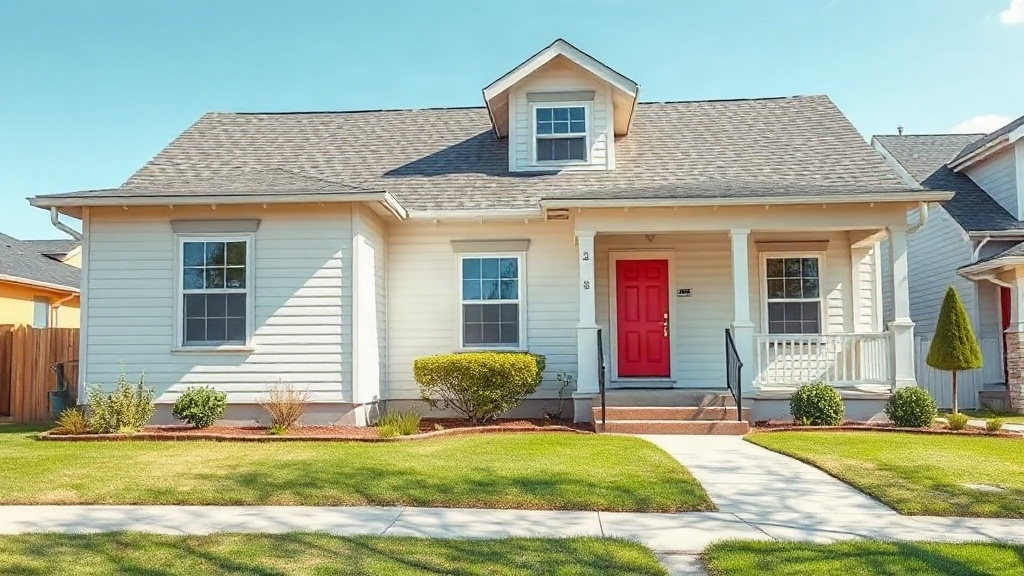
You run the numbers on a three-bed ranch and the spreadsheet says $48,300 in profit. That feels like a deal worth chasing, so you start drafting an offer. But that number rests on three guesses: what the house will sell for, what the rehab will cost, and how long you will hold it. If any one of them moves against you, the profit shrinks, and if two move at once it can vanish.
Want to skip the spreadsheet? FlipSmrt pulls comps, estimates ARV and rehab, and runs the deal math from just an address. Your first 3 analyses are free.
Here is the base deal used throughout this article. The After Repair Value (ARV) is $300,000 and the rehab budget is $45,000. Using the 70% rule, the Maximum Allowable Offer is ($300,000 x 0.70) - $45,000 = $165,000. Stack every cost on top of that purchase price and you get the full picture:
- Purchase price: $165,000
- Rehab: $45,000
- Buying costs at 2% of purchase: $3,300
- Holding costs at about $2,400/month for 6 months: $14,400
- Selling costs at 8% of sale price: $24,000
Total costs come to $251,700. Subtract that from the $300,000 sale and you land at $48,300 in profit. Every one of those lines is an estimate made before you own the property, and the three biggest swing factors (ARV, rehab, and months held) are the ones you control least.
Stress-testing flips the question. Instead of asking "how much will I make?", you ask "how far can each assumption break before I make nothing?" That point is your break-even. The distance between your projected numbers and break-even is your margin of safety, and it tells you far more about a deal than the headline profit does.
A flip with $48,300 of projected profit and a wide margin of safety is a strong deal. The same $48,300 sitting on a thin margin is a coin flip with your capital on the line. The rest of this article puts the base deal under pressure, one variable at a time and then all together, so you can see exactly where it breaks.
Worked Example 1: How Much ARV Drop Can This Flip Absorb?
Start by isolating one variable. Hold rehab at $45,000 and the timeline at six months, and stress only the sale price. Your fixed costs are $227,700: the $165,000 purchase, $45,000 rehab, $3,300 in buying costs, and $14,400 in holding costs. With selling costs at 8% of the sale price, profit becomes a simple formula: (0.92 x sale price) - $227,700.
At the projected $300,000 ARV, that formula gives you $276,000 - $227,700 = $48,300. Now walk the sale price down and watch what happens:
- 5% drop ($285,000): $262,200 - $227,700 = $34,500 profit
- 10% drop ($270,000): $248,400 - $227,700 = $20,700 profit
- Break-even: $227,700 / 0.92 = about $247,500
Break-even sits $52,500 below your ARV, which is a 17.5% cushion. The pattern is just as useful as the cushion itself. Every $10,000 drop in sale price costs you about $9,200 of profit, because the 8% you would have paid in selling costs shrinks along with the price. Profit falls almost dollar for dollar, so a single soft comp or a price cut after 45 days on market hits your pocket hard.
Break-even is not your real line, though. You need a personal minimum cushion: the profit you refuse to go below, plus how far the sale price must be able to fall before you hit it. Say you will not take on a flip unless it still clears $25,000 if the market softens. Solve for that sale price: ($227,700 + $25,000) / 0.92 = about $274,700. That is only an 8.4% drop from $300,000, a much thinner margin than the 17.5% break-even number suggests.
Decide that floor before you see the listing, not after you fall for the kitchen. A common approach is to require that the deal survives at least a 10% ARV drop while still hitting your minimum profit. If it does not, you lower your offer until it does, or you walk.
Worked Example 2: Rehab Overruns and Timeline Slips Hitting at Once
Bad news on a flip rarely arrives alone. The plumber finds cast iron, the permit sits in review, and suddenly you're paying for both. Take a deal with a $290,000 ARV, a $162,000 purchase, $5,800 in buying costs, a $45,000 rehab, $2,400 a month in holding costs over 6 months, and 5% selling costs. On paper it nets $48,300.
Now layer in realistic trouble. A 15% rehab overrun adds $6,750 ($45,000 x 0.15). A 3-month delay, 9 months instead of 6, adds $7,200 in holding ($2,400 x 3). That's $48,300 minus $6,750 minus $7,200, which leaves $34,350. If the market softens 5% while you're still sanding floors, the sale drops $14,500 and selling costs fall about $725. Profit slides to roughly $20,550.
Here are all three cases side by side, assuming an all-cash deal so cash invested is purchase, buying costs, rehab, and holding:
| Case | Profit | Cash Invested | Return on Cash |
|---|---|---|---|
| Best (pro forma) | $48,300 | $227,200 | 21.3% |
| Expected (overrun + delay) | $34,350 | $241,150 | 14.2% |
| Worst (plus 5% ARV drop) | $20,550 | $241,150 | 8.5% |
Notice what happens to the return. You put more cash in and get less back, so the return on cash falls by more than half. An 8.5% return for 9 months of contractor calls, risk, and tied-up capital is thin. A single extra surprise, like a failed inspection on the resale, could push it close to zero.
The fix is to set your offer from the worst case instead of the best one. Say you want at least $35,000 profit even if everything goes wrong. The worst case delivers $20,550 at a $162,000 price, so you're about $14,450 short. Cut the price by that amount and your offer becomes roughly $147,500. If the seller won't get near that number, you've learned the deal only works when nothing goes wrong, and that's when you walk away.
Run these numbers on a real deal in under 5 minutes
FlipSmrt turns an address into ARV, a rehab budget, and your Maximum Allowable Offer automatically.
Analyze a Property FreeNuances That Change Your Cushion
Two flips with the same projected profit can have very different breaking points. The base holding cost of $2,400 a month assumes everything stays on schedule, but hard money rarely stays that cheap once you slip. If your loan carries a 6-month term and a 1-point extension fee on a $200,000 balance, month seven costs $2,400 plus a $2,000 fee, so that one delayed month nearly doubles in price. Some lenders also step up the rate after maturity, so read the extension terms before you count on a cushion.
Timing and scope matter just as much. A house that hits the market in November may sit 30 to 45 days longer than the same house listed in April, which adds another month or more of carry you did not budget. Permit-heavy work (structural repairs, panel upgrades, rewiring, additions) depends on inspector schedules you cannot control. A cosmetic flip with paint, flooring, and fixtures can absorb a two-week slip, while a job waiting on a framing inspection can lose six weeks before a single drywall sheet goes up.
Your ARV deserves a bigger haircut when the comps are weak. Three sales tightly grouped between $305,000 and $315,000 justify a modest 3 to 5 percent stress. Two sales ranging from $285,000 to $335,000 mean your "$310,000 ARV" is a guess, and stressing it 10 percent or more is reasonable. Splits shrink your cushion too. On a $40,000 projected profit where you need at least $15,000 to make the deal worth your time, solo you can lose $25,000 before walking. With a 50/50 partner, your $20,000 share leaves only a $5,000 cushion before you fall below that $15,000 floor.
The practical move is to find your shakiest input and stress it hardest. FlipSmrt shows the adjusted sold comps within 0.5 miles behind the ARV and breaks rehab into line items by trade, priced for the property's county. If the comps are sparse or scattered, push ARV down harder. If the scope leans on permitted electrical or structural work, add months to the timeline instead of padding paint and flooring.
Stress-Testing Mistakes That Give False Confidence
A stress test only protects you if it tests the right things. The most common error is stressing one variable at a time. You drop ARV 5% and the deal survives, then you bump rehab 15% and it survives again, so you call it safe. Real problems cluster, because a slow rehab usually means a later sale and a softer price. Fix: always run one combined scenario where ARV, rehab, and timeline all move against you together.
Next, watch your selling costs. Many investors type a flat dollar amount, say $15,000, when the ARV is $250,000, then forget to update it after new comps push ARV to $310,000. At 6% for commissions and closing, the real cost is $18,600, so the sheet shows $3,600 of profit that does not exist. Fix: make selling costs a formula tied to sale price, never a typed number.
Delays cost more than holding costs. A two-month slip can push a spring listing into November, when buyer traffic thins and days on market stretch. Investors also inflate their starting point by pulling list-price comps instead of sold comps, and asking prices are not what buyers actually pay. Fix: pair every timeline slip with a modest ARV haircut for the later season, and build ARV only from closed sales nearby (FlipSmrt pulls sold MLS comps within 0.5 miles for this reason).
Counting contingency as profit is a quieter trap. If your rehab is $40,000 with a $6,000 contingency, that $6,000 is a planned cost, not a buffer you can claim as upside. When you then test a 20% overrun, the extra $8,000 stacks on top of the full $46,000, not inside it. Fix: keep contingency as its own cost line and never subtract it back out when reporting profit.
The costliest mistake happens after the test. The downside case shows profit shrinking to $9,000, but the base case still looks great, so you raise your offer by $10,000 to win the deal. You just spent the cushion the test told you to keep. Fix: set your MAO from the stressed scenario and treat that number as your ceiling.
Flip Stress-Test FAQ
What profit cushion should I require before I offer? Set a personal rule tied to your worst case, not your base case. For example, "I only offer if the deal still clears $15,000 after a 10% ARV drop, a 20% rehab overrun, and three extra months of holding." Pick a floor that would still make the project worth your time and risk if everything goes wrong at once. If the worst case dips below that floor, lower your offer until it doesn't.
Should I stress ARV or rehab harder? Stress both, but know which one moves more dollars on your deal. On a $300,000 ARV, a 5% miss costs $15,000, while a 20% overrun on a $50,000 rehab costs $10,000. On light cosmetic flips, ARV usually carries more risk. On gut jobs with old plumbing, foundation questions, or permit work, the rehab number deserves the heavier haircut.
How do I estimate my monthly holding cost? Add loan interest, property taxes, insurance, and utilities. A $200,000 interest-only loan at 11% runs about $1,833 a month, plus $300 in taxes, $150 in insurance, and $200 in utilities, for roughly $2,483. Round up to $2,500 and multiply by every month you might own the property, including listing and closing time.
Doesn't the 70% rule already build in enough cushion? Not always. With a $300,000 ARV and $50,000 rehab, MAO is ($300,000 x 0.70) minus $50,000, or $160,000, leaving a $90,000 spread. Subtract 8% selling costs ($24,000), about $3,200 in buying costs, $12,000 of holding, and $3,400 in loan points, and net profit drops to about $47,400. A 10% ARV drop then cuts that to roughly $17,400.
How can I run these scenarios quickly? Start with a solid base case, then flex one input at a time. FlipSmrt returns ARV from nearby sold comps, line-item rehab costs, MAO, and ROI in under 5 minutes, and your first 3 analyses are free. From there, adjust the ARV, rehab, and timeline inputs to your downside numbers and see whether the deal still clears your personal floor.
Ready to analyze your next deal?
Get ARV, renovation estimates, and full deal math in under 5 minutes. Your first 3 analyses are free.
Start Free Analysis