
What Makes a Comp Usable (and the Order to Relax Your Criteria)
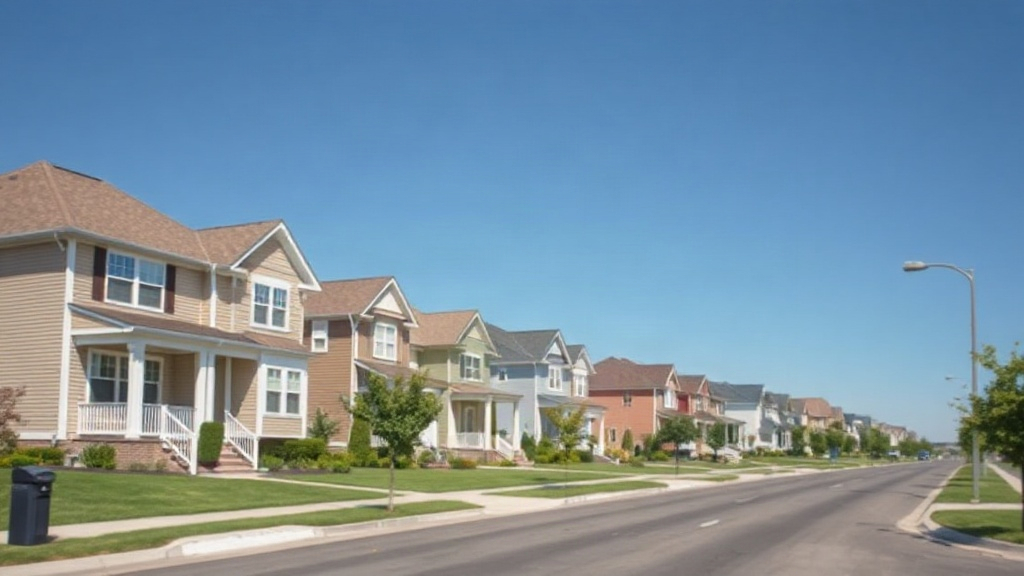
A comp only helps your ARV if a buyer would have weighed it against your finished flip. For a fix and flip, the ideal comp checks every box below. Hit all of them and you can usually trust the sale price with only small adjustments.
Want to skip the spreadsheet? FlipSmrt pulls comps, estimates ARV and rehab, and runs the deal math from just an address. Your first 3 analyses are free.
- Renovated to a finish level similar to your planned rehab
- Closed (not pending or active) within the last 6 months
- Within 0.5 miles of the subject
- Same property type (single-family to single-family, not a townhome)
- Square footage within about 15% of the subject
- Same bedroom count and within half a bath
- No major boundary crossed, such as a highway, rail line, school district line, or commercial strip
When you find only one or two sales that pass, loosen your criteria in a fixed order. Each step adds more risk than the one before it, because each adjustment is harder to measure. Start with time. Stretching from 6 months to 9 or 12 is the safest move, since market appreciation or decline is a measurable number you can apply to an older sale.
Next, widen the size range to roughly 20 to 25%. This gets riskier because price per square foot is not linear. A 2,200 square foot house usually sells for less per foot than a 1,600 square foot house on the same street, so a straight dollars-per-foot conversion will overstate value on a smaller subject.
Third, expand the radius, perhaps to 1 mile, but only within the same school zone and similar housing stock (same era, same construction style, same lot sizes). Location adjustments are mostly judgment calls, and a block that feels similar can carry a very different buyer pool.
Relax condition last. An unrenovated sale tells you what a house is worth before the work, not after it, and the gap between those numbers varies widely by neighborhood. If you use one, treat it as a floor and never as the basis for your ARV.
Worked Example 1: Stretching the Time Window and Adjusting Older Sales
Say your subject is a 3 bed, 2 bath, 1,500 sqft ranch you plan to fully renovate. Within six months and half a mile, you find exactly one renovated sale: a 3/2 at 1,500 sqft that closed for $305,000. Stretch the window to 12 months and two more renovated sales appear at 8 months ($288,000) and 11 months ($282,000). Those older sales are usable, but only after you account for how much prices moved since they closed.
Don't grab a national or metro appreciation figure for that adjustment. Derive it locally from repeat sales (the same house selling twice) or paired sales (two near-identical homes in the same subdivision selling at different times). Suppose two matching floor plans in the subject's subdivision sold 10 months apart, one at $270,000 and the later one at $280,800. That's a 4% gain over 10 months, or roughly 0.4% per month. Treat it as an estimate for this pocket only, and sanity-check it against a second pair if you can find one.
Now apply it. The 8-month comp gets 8 x 0.4% = 3.2%, so $288,000 x 1.032 = $297,216. The 11-month comp gets 11 x 0.4% = 4.4%, so $282,000 x 1.044 = $294,408. Both older sales now sit closer to the recent $305,000 sale, which tells you part of the gap was simply time, not a weaker house.
Next, handle size and features with small, defensible adjustments. If the 8-month comp is 1,450 sqft and local data supports about $60 per sqft for size differences, add 50 x $60 = $3,000, bringing it to $300,216. If the 11-month comp is 1,560 sqft, subtract 60 x $60 = $3,600, landing at $290,808. Make any feature adjustment (garage, finished basement, lot size) only when you can point to a paired sale that justifies the amount.
You now have three time and size adjusted values: $305,000, $300,216, and $290,808. That spread of about $14,000 is tight enough to work with, and far more honest than leaning on one sale alone. Keep the newest sale as your anchor and use the adjusted older sales to confirm or pull back from it.
Worked Example 2: Wider Radius, Active Listings as a Ceiling, and Reconciling to One Number
Sticking with the same 1,500-square-foot, 3-bed, 2-bath subject, we still only have the two adjusted sales from Example 1: a close, very similar sale adjusted to $301,000 and an older sale adjusted to $296,000. To add a third data point, widen the radius to 0.9 miles. The house we find sold four months ago for $312,000, and it sits on the same side of the main road as our subject. That detail matters because a busy arterial often splits school zones, traffic exposure, and buyer perception, so a sale across the road can mislead you.
The 0.9-mile sale is 1,620 square feet, about 120 feet larger than our subject. At roughly $75 per square foot for size adjustments in this area, that is a $9,000 deduction (120 x $75). Its adjusted value comes to $303,000. Because it is farther out, it earns less confidence than the closest sale, even though the number looks clean.
Next, check what is on the market: two active listings at $325,000 and $319,000, plus one pending at $310,000. These are a ceiling, never comps. List prices are what sellers hope for, and a pending has no confirmed sale price yet. If your ARV lands above the pending and near the actives, you are probably reading optimism instead of market evidence.
Now reconcile by weighting the closest, most similar sale heaviest:
- Close sale: $301,000 x 50% = $150,500
- Older sale: $296,000 x 25% = $74,000
- 0.9-mile sale: $303,000 x 25% = $75,750
That totals $300,250, which we round down to a conservative $300,000 ARV. It sits below the $310,000 pending, which is exactly where a defensible ARV should land. With $45,000 in rehab, MAO = ($300,000 x 0.70) - $45,000 = $165,000. If you had anchored to the $325,000 listing instead, you would get ($325,000 x 0.70) - $45,000 = $182,500. That is a $17,500 overpay, which comes straight out of your profit before the first contractor shows up.
Run these numbers on a real deal in under 5 minutes
FlipSmrt turns an address into ARV, a rehab budget, and your Maximum Allowable Offer automatically.
Analyze a Property FreeEdge Cases: Rural Lots, Unique Homes, and Neighborhoods With No Flips Yet
Rural properties break comp searches because land doesn't price in a straight line. If your subject sits on 5 acres and every nearby sale sits on 1 acre, you can't add value for the extra land by guessing. Pull recent vacant land sales in the county to find a per-acre figure, then apply it conservatively. If raw land trades around $8,000 per acre, the 4 extra acres might justify $32,000 on paper, but most buyers of homes value extra acreage at less than raw-land rates, so treat that number as a ceiling.
Oversized or one-off homes create the opposite problem. A 3,400 square foot custom build in a neighborhood of 1,600 square foot ranches won't sell at the same price per square foot as its neighbors. Buyers shopping that area have a budget set by the neighborhood, not by your floor plan. Expect the extra space to add some value, but far less than a simple price-per-foot calculation suggests.
Pocket neighborhoods where nobody has flipped a house yet require a different approach. Start with unrenovated sales, then add a condition adjustment tied to your actual rehab scope. Say three as-is sales average $185,000 and your $45,000 scope covers a new kitchen, two baths, flooring, and paint. You might add $35,000 to $40,000 for that condition change, but only for improvements a buyer can see and would pay for.
Then cap the result at the highest sale the neighborhood has ever recorded. If the adjusted figure lands at $225,000 but the top sale was $210,000, use $210,000. You would be asking a buyer to pay a price nobody on that street has paid before, and appraisers rarely support that.
A low comp count should also change your offer, not just your ARV. With one usable comp, consider trimming ARV by 5% as a cushion. At $210,000, MAO is ($210,000 x 0.70) minus $45,000, or $102,000. At $199,500, it drops to $94,650. If the seller won't accept that lower number, or you can't find even one defensible sale, walk away.
Mistakes That Inflate ARV When Comps Are Thin
When you only have one or two sales to work with, every error gets amplified. There is no third or fourth comp to dilute a bad number, so a single mistake flows straight into your offer. Most thin-comp errors push ARV up rather than down, because investors usually want the deal to work. Watch for these six.
- Treating list prices as sold prices. A list price is a seller's hope. Use active listings only as a ceiling, never as a comp.
- Crossing a school or highway boundary to find a higher sale. A stronger sale on the other side of the line often reflects a different buyer pool.
- Averaging a flipped sale with a distressed one. A $340,000 renovated sale and a $250,000 estate sale average to $295,000, a number that describes neither house.
- Ignoring seller concessions. A $320,000 sale with $12,000 in closing credits is really a $308,000 sale.
- Skipping time adjustments in a cooling market. Older sales overstate today's value when prices are softening.
- Leaning on a single outlier. One buyer overpaying does not set the market price.
These errors stack up quickly. Say your best comp sold eight months ago for $330,000 with $10,000 in concessions, and local prices have slipped about 0.5% a month. Net of concessions, the sale is really $320,000, and a roughly 4% decline brings it to about $307,200. Using the raw $330,000 would put your ARV about $22,800 too high, which inflates your MAO by roughly $15,960 at 70%.
FlipSmrt pulls MLS sold comps within 0.5 miles of the subject and shows the adjusted value of each one, so you can see right away how many sales actually support the ARV. Because it works from closed sales, list prices never sneak into the comp set. If the report comes back with only one or two comps, or with a wide spread between them, treat that as your signal for extra scrutiny. Before you trust the number, confirm each sale's concessions and closing date, and check which side of any boundary it sits on.
The rule for thin comps is simple. When the evidence is sparse, lean conservative and make every adjustment visible on paper. Overpaying by $16,000 can wipe out a large share of a flip's profit, while missing a deal by $5,000 only costs you one deal.
FAQ: Thin-Comp ARV Questions Investors Ask
How many comps do I really need? Three closed sales is the standard most lenders and appraisers look for, and it's a good target when the market gives it to you. But one tight comp (same bed and bath count, within 10% of the square footage, similar finish level, a few blocks away) is worth more than five loose ones. With only one or two, you can still estimate ARV. You just have to build that uncertainty into your offer instead of pretending it isn't there.
How far back can I go? Six months is comfortable, and 12 months usually works if you adjust for how the market has moved since the sale. Past 12 months, the adjustment itself becomes a guess. For example, if a comp sold 10 months ago for $280,000 and sold prices in that zip have risen about 4% since, adjust it to roughly $291,200 ($280,000 x 1.04). Base that trend on local sold data, not national headlines.
Can I use a pending sale? Yes, but only as supporting evidence, never as your anchor comp. The final contract price usually isn't public until closing, and many deals renegotiate after inspection or fall apart. Call the listing agent, because some will share a rough range. A pending listed at $299,000 tells you buyers are engaging near that level, which helps confirm a closed comp at $291,000. It does not prove the house is worth $299,000.
Should I get a second opinion? On a thin-comp deal, yes. A local agent who sells in that neighborhood often knows about off-market sales, comps with hidden problems, and buyer demand that MLS data can't show. Ask them two questions: what they would list your finished house at, and what they think it would actually close for. A pre-purchase appraisal costing a few hundred dollars is cheap insurance on a six-figure purchase.
How much should I lower my offer with only one good comp? A practical rule is to cut ARV by 5% to 10%, depending on how closely the comp matches. Say your single comp supports a $300,000 ARV and rehab is $45,000. Normally your MAO would be ($300,000 x 0.70) - $45,000 = $165,000. With a 5% haircut to $285,000, it becomes ($285,000 x 0.70) - $45,000 = $154,500. That $10,500 gap is your protection if the comp turns out to be the high end of the market.
Ready to analyze your next deal?
Get ARV, renovation estimates, and full deal math in under 5 minutes. Your first 3 analyses are free.
Start Free Analysis