
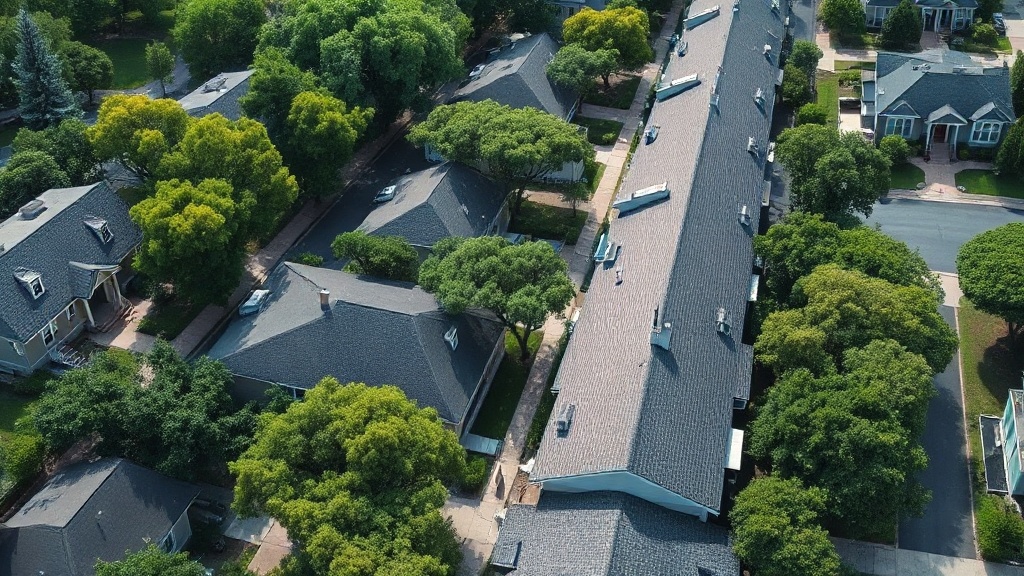
Understanding Market Potential: What Makes a Neighborhood Flip-Worthy?
Choosing the right neighborhood is one of the most important steps in evaluating a potential flip. A flip-worthy area has a combination of strong demand, favorable pricing trends, and a quick turnover rate for properties. These factors ensure that once your renovation is complete, there are buyers ready and willing to purchase at the price you need to make a profit. But how do you pinpoint these areas before committing to a deal?
Want to skip the spreadsheet? FlipSmrt pulls comps, estimates ARV and rehab, and runs the deal math from just an address. Try your first analysis free.
Start by analyzing median home price trends. A neighborhood with steadily increasing prices over the past few years indicates growing demand and appreciation potential. For example, if the median home price in a neighborhood has risen from $250,000 to $290,000 over the last three years, that’s a good sign. On the flip side, declining prices—like a drop from $270,000 to $240,000 in the same period—can be a red flag, suggesting a weakening market or oversupply.
Another critical metric is days on market (DOM). This measures how quickly homes are selling. A low DOM (e.g., 15-30 days) suggests a hot market where buyers are actively competing, which is ideal for flipping. Conversely, if homes are sitting for 90 days or more, you may struggle to sell your renovated property quickly, tying up your cash flow and cutting into profits.
Local demand indicators, such as population growth, job creation, and school district quality, also play a role. For instance, a neighborhood near a new corporate campus or with high-rated schools will likely see buyer interest grow. Look for tangible signs of demand, like multiple offers on comparable properties or a lack of inventory in the area.
Let’s compare two neighborhoods. In Neighborhood A, home prices have steadily risen 4% annually, homes sell within 20 days, and there’s a major new shopping center under construction. Contrast that with Neighborhood B, where prices have dropped 3% annually, the DOM averages 100 days, and local businesses are closing. The metrics clearly point to Neighborhood A as the better flip opportunity. Always lean on data to guide your neighborhood selection.
Screening Deals Efficiently: The 70% Rule in Action
When it comes to quickly screening real estate deals, the 70% rule is a trusted guideline for fix-and-flip investors. This rule helps you determine the maximum price you should pay for a property to ensure the deal leaves room for profit after accounting for repairs and other costs. The formula is straightforward: Maximum Allowable Offer (MAO) = (ARV x 0.70) - Repair Costs. By plugging in a few key numbers, you can instantly see if a potential deal is worth pursuing further or not.
Here’s how it works in practice. Imagine you’re evaluating a property with an After Repair Value (ARV) of $300,000. You estimate that the necessary repairs will cost $50,000. Using the 70% rule, you calculate the MAO as follows:
- Start with the ARV: $300,000
- Multiply by 0.70 (to account for a 30% margin for profit and other costs): $300,000 x 0.70 = $210,000
- Subtract the repair costs: $210,000 - $50,000 = $160,000
In this case, your MAO is $160,000. This means you should not offer more than $160,000 for this property if you want to adhere to the 70% rule. Offering any higher could shrink your profit margin or leave you exposed to unexpected costs.
While the 70% rule is a great starting point, it’s important to remember that it doesn’t include every potential expense, such as closing costs, holding costs, or financing fees. Use it as a quick filter to weed out overpriced deals, then dive deeper into the numbers for promising properties. With FlipSmrt, you can streamline this process even further by instantly generating an MAO and deal analysis based on real-time data, saving you hours of manual calculations.
Identifying Red Flags in Listings and Leads
Spotting red flags early can save you from wasting time and money on deals that won’t pan out. Common red flags in property listings include unrealistic asking prices, vague descriptions, undisclosed repair needs, and potential legal issues like liens or zoning violations. These issues can quickly turn a seemingly great deal into a financial disaster if overlooked. Knowing what to watch for is critical to protecting your bottom line.
Unrealistic asking prices are one of the biggest red flags. For example, if a property is listed at $300,000 in a neighborhood where similar homes in good condition sell for $320,000, the profit margin may not justify the deal after factoring in renovation costs. Sellers who overprice often don't leave enough room for you to make a reasonable profit. Always compare the asking price to recent comparable sales (comps) to verify if the deal is even worth considering.
Hidden repair costs can also derail a deal. Imagine you calculate a $40,000 renovation budget based on visible issues like outdated bathrooms and flooring but fail to account for a $25,000 foundation repair discovered during inspection. If the After Repair Value (ARV) is $320,000, using the 70% rule gives you a Maximum Allowable Offer (MAO) of $184,000: (320,000 x 0.70) - $40,000. However, with the added $25,000 repair cost, your actual renovation budget rises to $65,000, reducing your MAO to $159,000. Overpaying even slightly could turn a once-promising profit into a loss.
Legal or zoning issues are another area where red flags can lurk. Properties with unpaid liens, unclear ownership, or zoning restrictions can lead to costly delays or even make the project unworkable. Always perform a title search and confirm zoning compliance before closing a deal. Ignoring these steps could leave you stuck with a property you can't flip or rent.
To avoid these pitfalls, develop a checklist for red flags: compare the asking price to comps, overestimate repair costs to protect your margins, and verify legal and zoning conditions early. Identifying these issues upfront allows you to focus on deals with real potential while steering clear of financial traps.
Run these numbers on a real deal in seconds
FlipSmrt turns an address into ARV, a rehab budget, and your Maximum Allowable Offer automatically.
Analyze a Property FreeNuances and Edge Cases: When the Numbers Don't Tell the Full Story
Real estate investing often relies on hard numbers, but sometimes those numbers don't capture the full picture. For example, properties in gentrifying neighborhoods or with unique features may not perform well under a strict 70% rule analysis today, but they could hold hidden potential. Overlooking these nuances means you might pass on a deal that could yield big rewards with a bit of foresight.
Consider this scenario: A single-family home in an older neighborhood is listed for $180,000. The comps in the area suggest an After Repair Value (ARV) of $250,000, and the rehab budget is estimated at $40,000. Using the 70% rule, the Maximum Allowable Offer (MAO) is calculated as (250,000 x 0.70) - 40,000 = $135,000. At first glance, the $180,000 asking price seems far too high, and you might be tempted to walk away.
However, what if the neighborhood is on the brink of transformation? Suppose a major mixed-use development is breaking ground just a few blocks away, expected to bring new retail, dining, and job opportunities within the next two years. Or maybe the home has a unique architectural style that appeals to a specific niche of buyers, even though the surrounding homes are more generic. These factors don't show up in the comps but can have a huge impact on future resale value.
In cases like these, deeper due diligence is critical. Research local zoning changes, planned developments, or recent market trends in the area. Talk to local agents or appraisers who understand how these intangibles might influence future property values. While you still need to be cautious, recognizing these nuances can help you spot opportunities others might miss.
The takeaway: Numbers are your foundation, but context is key. When a property doesn’t fit neatly into your spreadsheet, pause and ask whether external factors might change the equation. A higher upfront risk might just lead to outsized long-term rewards.
Common Mistakes When Vetting Deals (And How to Avoid Them)
Even experienced investors fall into common traps when analyzing potential deals. These mistakes can turn a promising investment into a costly misstep. By recognizing these pitfalls early, you can save time, money, and frustration. Below are three of the most frequent errors investors make and how to steer clear of them.
Underestimating Rehab Costs: Many investors misjudge the scope of repairs, either by relying on ballpark estimates or missing hidden issues like plumbing or electrical upgrades. For example, budgeting $20,000 for a kitchen remodel but ignoring outdated wiring can blow your budget. To avoid this, always break down repair costs line by line. Use tools like FlipSmrt to generate a detailed rehab budget based on the property condition and market rates. This ensures you’re not caught off guard by unexpected expenses.
Relying on Outdated Comps: Real estate markets can shift quickly, and using old comparable sales (comps) can result in an inflated After Repair Value (ARV). For instance, if you base your ARV on 12-month-old sales, you risk overestimating the property's future worth, especially in a cooling market. To prevent this, use comps from the last 3-6 months and ensure they are truly comparable in terms of size, location, and condition. FlipSmrt simplifies this by pulling recent, relevant sales automatically, saving you time and reducing guesswork.
Skipping Neighborhood Research: Focusing solely on property numbers without understanding the neighborhood can lead to misaligned expectations. A house with a great ARV on paper might be in an area with declining demand or high crime rates, which will hurt resale potential. Always research the local market trends, such as days on market, school ratings, and rental demand. Pay attention to nearby developments or zoning changes that might impact long-term value.
The takeaway is clear: thorough analysis is non-negotiable. By avoiding these common mistakes and leveraging accurate tools like FlipSmrt, you can make smarter, more confident investment decisions. Remember, the numbers only work if the analysis is correct.
FAQ: Quick Answers to Common Deal Vetting Questions
What metrics should I prioritize when analyzing a deal?
The most critical metrics depend on your strategy. For fix-and-flip deals, focus on the ARV (After Repair Value), estimated rehab costs, and the Maximum Allowable Offer (MAO). For buy-and-hold rentals, prioritize metrics like cap rate, cash-on-cash return, and NOI (Net Operating Income). If the numbers don't meet your target thresholds, the deal likely isn't worth pursuing.
How do I handle properties with no comps available?
When no recent or relevant comps exist, start by broadening your search radius or time frame slightly. Look for properties with similar characteristics (square footage, bed/bath count, condition, etc.) even if they're not perfect matches. If you're still coming up short, consider the risks of uncertainty in your ARV estimate and adjust your offer conservatively to create a buffer for potential surprises. FlipSmrt can help here by analyzing hard-to-find comps for you.
When should I walk away from a deal?
Walk away if the numbers don't work. For example, if the MAO you calculate is far below the seller's asking price and negotiations aren't moving, it's a red flag. Also, walk if inspection reveals unexpected issues like structural damage or environmental hazards that would blow your rehab budget. Trust your math and don’t let emotions override logic.
What are some hidden costs investors often overlook?
Commonly overlooked costs include holding costs (property taxes, utilities, insurance during rehab), closing costs (both buying and selling), and contingencies for unexpected repairs. Always build a buffer into your rehab budget—typically 10%-15% extra—to account for these surprises.
How do I decide between flipping and holding a property?
It depends on your goals and the property. If the deal offers high short-term profit and aligns with your ARV and MAO calculations, flipping may make sense. If it generates steady cash flow with favorable cap rate and cash-on-cash return metrics, holding could be better. Use the numbers to guide your decision, not just personal preference.
Ready to analyze your next deal?
Get instant ARV, renovation estimates, and full deal math. Your first analysis is on us.
Start Free Analysis