
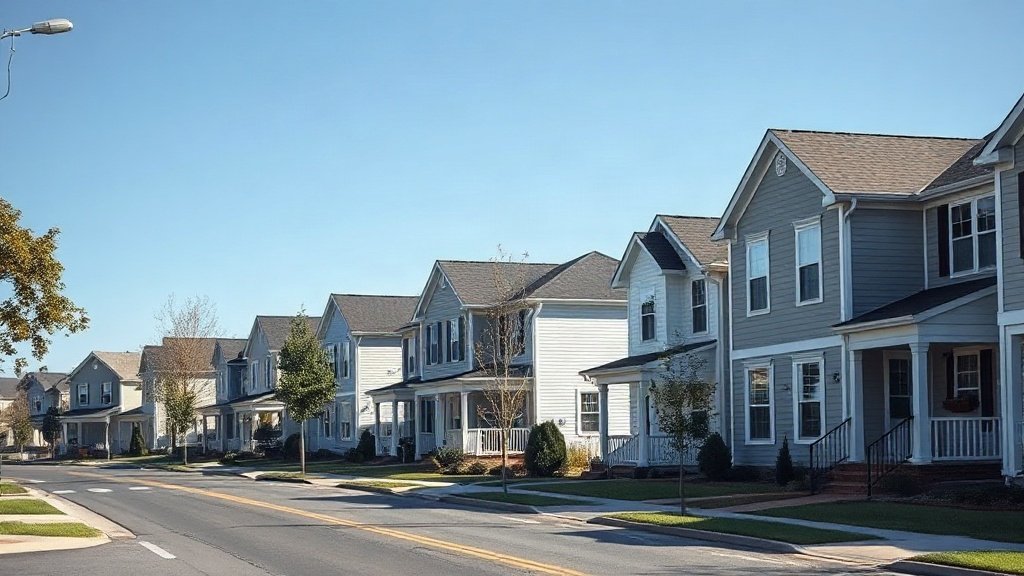
Understanding ARV: The Foundation of Real Estate Profitability
After Repair Value (ARV) is one of the most critical numbers in real estate investing. It represents the estimated market value of a property after it has been fully renovated. Why does this number matter so much? Because nearly every key decision in a deal stems from it, including how much to offer, how much to spend on repairs, and what kind of profit to expect. Without an accurate ARV, you are essentially guessing—and guessing is a fast track to losing money.
Want to skip the spreadsheet? FlipSmrt pulls comps, estimates ARV and rehab, and runs the deal math from just an address. Try your first analysis free.
The ARV directly influences your Maximum Allowable Offer (MAO), which is the highest price you can pay for a property while still leaving room for profit. The standard 70% rule formula is: MAO = (ARV x 0.70) - repair costs. For example, if a property's ARV is $300,000 and the renovation costs are $50,000, your MAO would be $160,000: ($300,000 x 0.70) - $50,000. Set the ARV too high, and you risk overpaying. Set it too low, and you might pass on a great deal.
Calculating ARV starts with finding comparable sales, or "comps," which are similar properties that have recently sold in the same area. Ideally, comps should match the subject property in size, layout, location, and condition after the planned rehab. For instance, if you're flipping a 3-bedroom, 2-bathroom home with 1,500 square feet, you would look for similarly sized homes with the same number of beds and baths that were sold in the last 6-12 months.
Once you've gathered comps, adjustments may be needed to account for slight differences. If a comp has a newer roof or an extra bedroom, for example, you would adjust its sale price to reflect what your property would be worth with the same features. This ensures your ARV is as accurate as possible, which is crucial for making informed investment decisions.
In short, ARV is the anchor for every profitable deal. Nailing this number gives you the confidence to act decisively, knowing your math will hold up when it matters most.
Step-by-Step: Pulling Comps for an Accurate ARV Estimate
Accurate ARV estimates start with selecting the right comparable properties, or "comps." A comp is a recently sold property similar to the one you’re analyzing. The goal is to find homes that closely match in location, size, condition, and sale date. Each of these factors plays a key role in ensuring your ARV estimate reflects the current market.
First, prioritize location. Comps should ideally be within a half-mile radius of your target property. Staying close avoids differences in neighborhood desirability or school districts, which can significantly impact value. If the target property is in a rural area where comps may be sparse, you might need to expand to a wider radius, but only as a last resort.
Next, match the size and layout. Look for homes with a similar square footage, typically within 10-15% of your property’s size. For example, if your property is 1,500 square feet, comps between 1,350 and 1,650 square feet are ideal. Focus on properties with a similar number of bedrooms and bathrooms as well. A 3-bed, 2-bath home isn’t directly comparable to a 5-bed, 4-bath, even if the square footage is similar.
Condition is another critical factor. If your target property will be fully renovated, compare it to homes that were also in turn-key condition when sold. Avoid using distressed sales or "as-is" properties unless they match your property’s post-rehab state. Lastly, ensure the sale date is recent—comps sold within the last 3-6 months reflect current market trends better than older sales.
Here’s an example: You’re analyzing a 1,500-square-foot, 3-bed, 2-bath home in a suburban area. Three nearby comps sold within the last three months: a 1,450-square-foot home for $320,000, a 1,525-square-foot home for $330,000, and a 1,510-square-foot home for $325,000. These comps are similar in size, condition, and location, so the estimated ARV for your property would be the average: $325,000. This figure gives you a solid foundation for calculating the deal’s potential profitability.
Adjusting Comps: Factors That Can Impact ARV Accuracy
Once you’ve identified comparable properties (comps) for your subject property, the next step is to adjust for differences. Raw comp prices rarely align perfectly because no two properties are identical. Factors like square footage, lot size, age, and amenities can significantly influence value, and failing to account for these differences can skew your ARV calculation.
Adjusting comps often starts with price per square foot. For example, if a comp sold for $300,000 and has 1,500 square feet, its price per square foot is $200 ($300,000 ÷ 1,500). If your subject property is slightly larger at 1,700 square feet, you might add $200 per extra square foot: $200 x 200 = $40,000. This adjustment increases the comp’s value to $340,000 to better reflect your property’s size.
Lot size adjustments may also be necessary, especially in areas where outdoor space is highly valued. If the comp has a 5,000-square-foot lot and yours has 6,000 square feet, you may need to factor in an additional $10,000 for the larger lot (assuming land in the area adds $10 per square foot). Conversely, subtract if your lot is smaller.
Age and condition are trickier to quantify but equally important. A comp built in 2010 may sell for more than a property from 1980 due to modern layouts and fewer maintenance concerns. To adjust, review local sales to estimate the price premium for newer homes. Similarly, amenities like a pool, upgraded kitchen, or finished basement should be accounted for. If comps with pools in your area sell for $20,000 more, add (or subtract) that amount accordingly.
Accurate adjustments require market knowledge, but even rough estimates are better than ignoring differences. By systematically adjusting for size, lot, age, and features, you’ll produce a more realistic ARV. In the example above, combining the $40,000 size adjustment with a $10,000 lot adjustment and a $20,000 pool addition could bring the adjusted comp value to $370,000—far more accurate than using the unadjusted $300,000 sale price.
Run these numbers on a real deal in seconds
FlipSmrt turns an address into ARV, a rehab budget, and your Maximum Allowable Offer automatically.
Analyze a Property FreeEdge Cases: When ARV Becomes Tricky
Not every property fits neatly into the standard ARV calculation process. Unique properties, rural areas with limited comps, or rapidly shifting markets can make accurate valuation a challenge. These edge cases require extra attention and often more creative problem-solving to avoid overestimating value and jeopardizing your deal. Let’s break down these tricky scenarios and how to handle them.
Unique properties—such as historic homes or custom-built designs—often lack direct comparables. If you’re analyzing a Victorian home surrounded by mid-century ranches, standard comps won’t reflect its true value. In these cases, look for comps that share key defining traits, even if they’re farther away or slightly older sales. For example, if your subject property is a 4-bedroom, 3-bath Victorian listed at $320,000, try to identify other Victorians with similar size and condition within a 10-15 mile radius. Adjust the comps for location differences carefully, factoring in neighborhood desirability.
In rural areas, low population density often means fewer recent sales to compare. If the closest comp is 20 miles away, you’ll need to widen your search radius and consider properties with similar acreage, square footage, and build quality. Another strategy is to use a cost-to-build approach as a cross-check. Calculate the approximate replacement cost of the home (land excluded) and compare that to the local market’s typical price per square foot for similar homes.
Rapidly shifting markets—whether due to economic changes, sudden demand spikes, or new developments—can make past sales unreliable. If you’re in a market where prices are climbing 10% month-over-month, even a 3-month-old comp might undervalue your ARV. In these situations, track the trajectory of recent sales by calculating the month-over-month appreciation rate. For instance, if local prices are rising 2% per month and your best comp sold for $400,000 two months ago, adjust that comp upward to $416,000 to reflect current trends.
The key to navigating these edge cases is to stay cautious and conservative. When in doubt, lean on multiple valuation methods (e.g., comps, cost-to-build, and income approaches for rentals). Overconfidence in an inflated ARV can lead to disastrous missteps in your deal analysis. Always double-check your assumptions and err on the side of underestimating rather than overestimating value.
Common ARV Mistakes That Can Destroy Your Deal
Misjudging the After Repair Value (ARV) can turn a promising deal into a financial disaster. Even a small error in your ARV estimate can ripple through your deal math, cutting into your profit—or wiping it out entirely. Here are the most common mistakes investors make when calculating ARV, and how to avoid them.
1. Using outdated comps: Real estate markets can shift quickly. If you rely on comps that are six months or older in a fast-changing market, you risk basing your ARV on outdated pricing trends. For example, if the market has cooled and you base your ARV on peak prices from six months ago, your property might sell for $20,000 less than expected—turning a $15,000 profit into a $5,000 loss, or worse.
2. Ignoring condition differences: A fully renovated comp and a property with basic updates may not command the same price, even if they are identical on paper. Overestimating your ARV by $10,000 because you ignored condition differences could lead you to overpay for the property upfront. Always adjust for differences like finishes, layout upgrades, or curb appeal when analyzing comps.
3. Over-relying on automated estimates: Automated valuation tools can provide a quick ARV estimate, but they often miss critical context like hyper-local market trends or property-specific quirks. For example, a tool might give you an ARV of $250,000 based on average comps, but fail to account for the fact that your property backs up to a busy highway, which could reduce the value significantly.
Consider a blown flip to see the cost of these mistakes. Imagine you purchase a fixer-upper for $150,000, expecting an ARV of $300,000 based on flawed comps. After a $50,000 rehab, the property only sells for $270,000 due to condition and location differences you overlooked. Instead of your planned $40,000 profit, you’re left with barely $10,000 after closing costs and holding expenses, or you might even break even. Avoiding these pitfalls is essential to protect your bottom line.
To sidestep these errors, always double-check comps for recency, adjust for condition honestly, and use automated tools as a starting point—not the final word. This diligence can save you from costly surprises down the line.
ARV FAQ: Quick Answers to Common Investor Questions
What’s a good range for ARV adjustments? When adjusting comparable sales (comps) to estimate ARV, aim for adjustments that reflect real market conditions without overcompensating. For example, if one comp has a garage and your subject property does not, you might adjust down by $10,000 to $15,000, depending on the local market. Similarly, for square footage, a common adjustment is $30 to $50 per square foot, though this varies by area. Always stay within a reasonable range to avoid inflating or undervaluing your ARV. If you’re unsure, local appraisers or seasoned agents can provide guidance specific to your market.
How far back can I pull comps? Ideally, comps should come from the last 3 to 6 months to reflect current market conditions. In a rapidly shifting market (up or down), prioritize more recent sales—30 to 90 days is best. If your area has low transaction volume, you may need to stretch to 12 months, but use caution. The further back you go, the less reliable the data becomes, especially if market conditions have changed. Always note the time frame in your analysis so you can adjust accordingly if the market has shifted significantly.
Can I trust online AVMs for ARV? Automated Valuation Models (AVMs), like those used by Zillow or Redfin, can provide a quick ballpark figure, but they often lack the nuance real estate investors need for accurate ARV calculations. AVMs typically don’t account for property condition, specific renovations, or hyper-local factors that can significantly impact value. Use AVMs as a starting point, but always verify with hand-picked comps and your own adjustments. Over-relying on AVMs can lead to costly inaccuracies in your deal math.
ARV accuracy relies on careful adjustments, recent comps, and skepticism of automated tools. By asking the right questions and verifying your data, you’ll avoid common pitfalls and make smarter investment decisions.
Ready to analyze your next deal?
Get instant ARV, renovation estimates, and full deal math. Your first analysis is on us.
Start Free Analysis