
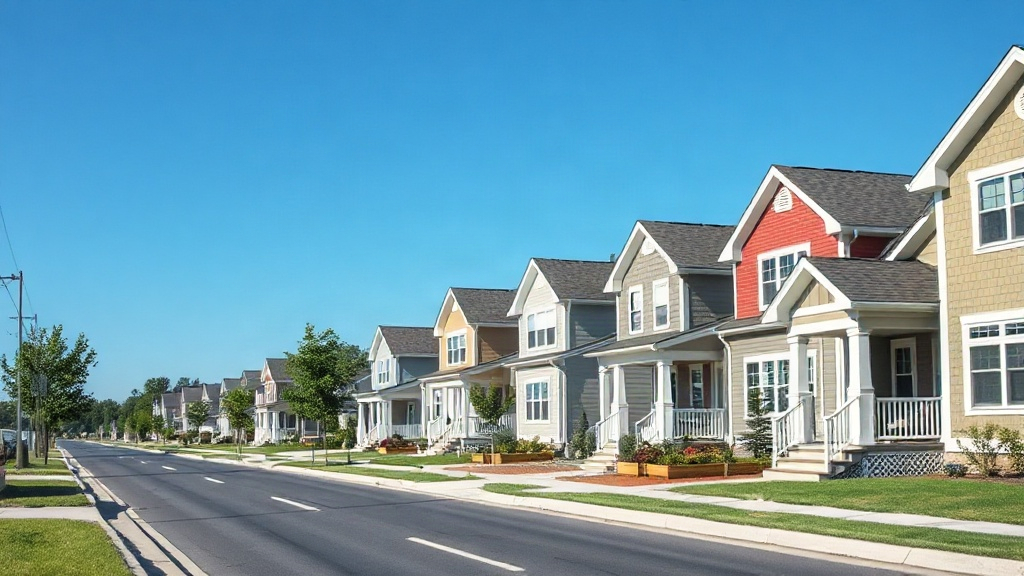
What Is ARV and Why Does It Matter?
After Repair Value (ARV) is one of the most critical numbers in real estate investing, especially for fix & flip and BRRRR strategies. ARV represents the estimated market value of a property after it has been fully renovated. This number sets the foundation for nearly every decision you’ll make as an investor, from determining how much to offer on a property to calculating your potential profit margins.
Want to skip the spreadsheet? FlipSmrt pulls comps, estimates ARV and rehab, and runs the deal math from just an address. Try your first analysis free.
For fix & flippers, ARV is the target sale price. It tells you what the home could sell for in its best condition, based on comparable sales in the area. For BRRRR investors, ARV determines how much you can refinance out of the property after repairs, directly affecting how much capital you can recycle into your next deal. Without an accurate ARV, your deal math is unreliable, and you risk overpaying or underestimating costs.
ARV also directly ties into the Maximum Allowable Offer (MAO), a formula used by investors to decide the highest price they should pay for a deal. Using the 70% rule, MAO is calculated as (ARV x 0.70) - repair costs. For example, if the ARV of a property is $300,000 and the estimated repairs are $50,000, the MAO would be (300,000 x 0.70) - 50,000 = $160,000. Misjudging the ARV by even 5% could lead to significantly overpaying and slashing your profit margins.
Lastly, ARV is the anchor for projecting your profit. If your target ARV is off, your profit estimate will be too. For instance, if you expect a $40,000 profit but your ARV is inflated by $20,000, that “profit” could evaporate when the property sells for less. Accurate ARV analysis protects you from these costly surprises.
In short, ARV is not just a number—it’s the backbone of your deal analysis. Nail it, and you set yourself up for success. Get it wrong, and your deal could fall apart before it even begins.
How to Choose the Right Comps: A Step-by-Step Guide
Choosing the right comparable sales (comps) is the foundation for estimating a property's After Repair Value (ARV) accurately. Comps should reflect the most similar properties to your subject house in terms of location, size, condition, and sale date. Here's a step-by-step guide to help you select solid comps.
Start with location. Look for comps within the same neighborhood or a 0.5-mile radius of your subject property. Crossing major roads, train tracks, or school district lines can often lead to less relevant comparisons. For example, if your subject property is a 3-bed, 2-bath, 1,500 sq. ft. house at 123 Main Street, focus on properties that are close by and share the same market dynamics.
Next, match the property type. If your subject house is a single-family home, avoid comparing it to townhomes or condos. Then, narrow down by size. A good rule of thumb is to stay within 10-20% of your subject property’s square footage. For the 1,500 sq. ft. house at 123 Main Street, suitable comps would be between 1,200 and 1,800 sq. ft. This keeps your comparisons relevant while allowing for some flexibility.
Pay close attention to the property’s age and style. A 1950s ranch-style home isn’t directly comparable to a newly built modern house, even if the square footage is similar. Aim for comps built within 10-15 years of the subject property. Finally, check the sale date. Use properties that sold within the last six months to reflect current market conditions. If the market is rapidly changing, you might narrow this to the last three months.
For the 123 Main Street example, ideal comps might be:
- 456 Oak Drive: 3-bed, 2-bath, 1,450 sq. ft., sold for $320,000 in the same neighborhood 3 months ago.
- 789 Pine Lane: 3-bed, 2-bath, 1,600 sq. ft., sold for $330,000 0.4 miles away 5 months ago.
- 321 Elm Street: 3-bed, 2-bath, 1,500 sq. ft., sold for $325,000 0.3 miles away 4 months ago.
By following these steps, you ensure your ARV calculations are anchored in realistic, data-driven comps that reflect the true market value of your property.
Adjusting Comps for Accurate ARV: A Numeric Example
Adjusting comparable sales is critical to arriving at a reliable ARV. Properties are rarely identical, so you need to account for differences like size, bedroom count, or amenities. These adjustments ensure your subject property is valued on an apples-to-apples basis. Let’s walk through a concrete example to illustrate how to do this.
Imagine your subject property is a 3-bedroom, 2-bath, 1,500-square-foot house. You find a nearby comp that sold for $320,000, but it’s slightly larger at 1,600 square feet and also has four bedrooms. To adjust this comp, start by calculating its price-per-square-foot: $320,000 ÷ 1,600 = $200 per square foot.
The comp is larger by 100 square feet. To adjust for this, multiply the price-per-square-foot by the difference in size: 100 × $200 = $20,000. Subtract this $20,000 from the comp’s sale price to normalize it to the smaller size of your subject property. That leaves $300,000.
Next, account for the extra bedroom. Let’s say in this market, an extra bedroom typically adds $10,000 in value. Subtract that amount as well: $300,000 - $10,000 = $290,000. After these adjustments, the comp suggests an adjusted value of $290,000 for your subject property.
By making logical, market-based adjustments like these, you refine your ARV estimate and avoid overvaluing the property. Remember, each market varies, so be sure your adjustments reflect local trends. Tools like FlipSmrt can streamline this process by automating adjustments, but understanding the math behind it builds your investing confidence.
Run these numbers on a real deal in seconds
FlipSmrt turns an address into ARV, a rehab budget, and your Maximum Allowable Offer automatically.
Analyze a Property FreeWhen Price-Per-Square-Foot Can Mislead You
Price-per-square-foot is a common shorthand for estimating property values, but it can mislead you in certain scenarios. This metric assumes that every square foot is created equal, which isn’t always the case. When dealing with properties that have unique features, luxury finishes, or significant upgrades, relying solely on price-per-square-foot averages can undervalue or overvalue the property.
Take this example: You’re analyzing a 2,500-square-foot home with high-end finishes like custom cabinetry, marble countertops, and premium appliances. The closest comp in the neighborhood is also 2,500 square feet but has standard-grade finishes—laminate countertops, builder-grade cabinets, and basic appliances. If the average price-per-square-foot for the area is $150, both properties would appear to have an ARV of $375,000 (2,500 sq. ft. x $150). However, this ignores the significant added value of the luxury finishes in the subject property.
To adjust for this, you need to account for the cost of those finishes and how buyers in the market value them. For example, if luxury finishes in this area typically add $50,000 in value, the ARV for your subject property would be closer to $425,000, not $375,000. Ignoring this adjustment could cause you to undervalue the property and make poor investment decisions.
Price-per-square-foot is also unreliable for very small or very large properties. A 1,200-square-foot home might sell for a much higher price-per-square-foot than a 4,000-square-foot home in the same area, due to differences in buyer demand and affordability thresholds. Always consider the broader context and avoid relying on simple averages when unique factors are at play.
The takeaway: Price-per-square-foot is a useful baseline, but it’s not the full story. Adjust for unique features, market expectations, and property-specific details to get an accurate ARV.
Common ARV Mistakes That Kill Deals
Misjudging the After Repair Value (ARV) can wreck an otherwise promising deal. A flawed ARV estimate leads to overpaying, underestimating risk, or failing to secure financing. Here are the most common ARV mistakes that investors make—and how to avoid them.
One major error is using outdated comps. Real estate markets can shift rapidly, and a comparable sale from 18 months ago may no longer reflect current conditions. For example, suppose you estimate an ARV of $250,000 for a property based on a similar home that sold for $248,000 a year and a half ago. If the market has slowed since then, with prices declining by 5%, your true ARV might only be $235,000. That $15,000 difference could turn a profitable flip into a loss once repair costs and holding expenses are factored in.
Another common mistake is failing to account for condition differences between the subject property and the comps. Comparing your fixer-upper to a fully renovated home without adjusting downward will inflate your ARV. For instance, if the comp has high-end finishes and your rehab budget doesn’t include those upgrades, the comp isn’t truly equivalent. You need to subtract the value of those premium features to arrive at an accurate ARV.
Ignoring outlier sales is another pitfall. Investors sometimes cherry-pick the highest-priced comp to justify their deal, even if the property isn’t a realistic match. A comp that’s far above the median price in the area may reflect an unusual buyer situation or unique features that your property lacks. Relying on such outliers can lead to overestimating ARV and overpaying for the deal.
To avoid these mistakes, always use comps that are recent, similar in condition, and within a tight geographic radius. Adjust for any key differences, and throw out outliers that don’t align with the broader market. A disciplined approach to ARV can save you from costly surprises later.
FAQ: Quick Answers to Your ARV Questions
Can I use Zillow for comps?
Zillow can be a starting point, but it shouldn’t be your only source. Its Zestimate is an algorithmic guess that often lacks the nuance of local market conditions. Instead, focus on the actual sales data listed on Zillow. Look for recently sold properties within a half-mile radius that closely match your subject property in size, age, and features. Cross-check this data with other platforms or MLS access if possible.
What if there are no good comps nearby?
If local comps are scarce, expand your search radius incrementally, starting with a one-mile range. Prioritize properties in similar neighborhoods with comparable school districts, zoning, and amenities. If you still can’t find good comps, adjust for differences in location by factoring in average price-per-square-foot trends between neighborhoods. This step requires caution—neighborhood desirability can significantly impact value, and over-adjusting may mislead your ARV calculation.
How do I adjust for a high-demand neighborhood?
In a high-demand area, homes may sell for a premium. To adjust ARV accurately, analyze recent sales trends. If comparable homes sold quickly or above asking price, you may need to account for a market premium. For instance, if comps show a 5-10% price increase over list price, reflect that trend in your ARV. However, avoid assuming perpetual appreciation—base your adjustments strictly on current, verifiable data.
Should I include distressed sales as comps?
Generally, no. Distressed sales—like foreclosures or short sales—are typically outliers and don’t reflect fair market value. The only exception is if your subject property is also distressed and will remain so after your investment. Otherwise, prioritize arms-length transactions, where both buyer and seller acted in their own best interest without pressure.
How often should I refresh my comps?
Real estate markets fluctuate, so update your comps regularly. If more than 3-6 months have passed since your initial ARV calculation, reevaluate. New sales data could significantly impact your numbers, especially in volatile or rapidly appreciating markets. Using stale comps can lead to overpaying or misjudging profitability.
Ready to analyze your next deal?
Get instant ARV, renovation estimates, and full deal math. Your first analysis is on us.
Start Free Analysis